
The country
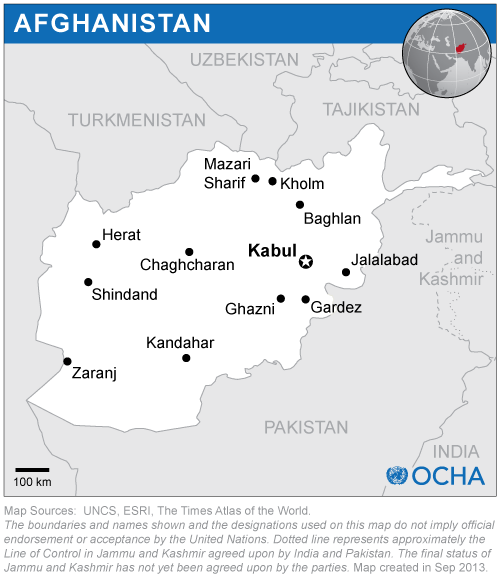
Afghanistan is a landlocked country in Southern Asia, bordering Iran, Turkmenistan, Uzbekistan, Tajikistan, China, and Pakistan. Its national capital is Kabul. Afghanistan covers a land area of 652,230 square kilometers. As of 2026, the country has an estimated population of around 48.6 million people.
The humanitarian situation
Afghanistan remains in the grip of one of the world's worst humanitarian crises. In 2026, an estimated 21.9 million people — 45 percent of Afghanistan’s population — are in need of humanitarian assistance. The cumulative effects of violent conflict, internal displacement, drought and other natural disasters such as earthquakes have dramatically increased humanitarian needs throughout the country. The surge in the number of Afghans forced or compelled to return to Afghanistan last year has worsened the crisis.
The humanitarian situation continues to be driven by worsening food insecurity, recurrent shocks, including climate-driven drought, large-scale returnee inflows, frequent earthquakes and floods, multiple disease outbreaks, and severe protection risks, especially for women and girls.
In August 2025, a major earthquake struck the eastern region, killing thousands and destroying entire villages in remote, impoverished areas. It was one of the deadliest earthquakes in Afghanistan's modern history. Afghanistan has experienced four major earthquakes in the past four years, each devastating different regions of the country.
Afghanistan must also contend with a worsening climate crisis. After years of drought, more and more households are feeling the impact, and most of the provinces in Afghanistan report extremely low water quality. The country is currently facing a severe drought-related crisis that is disrupting agricultural and pastoral livelihoods. The north, northwestern, and northeastern regions are among the hardest hit, with 12 provinces severely affected and 3.4 million people impacted.
Forced returns from Pakistan and Iran further compound the situation, with more than 2.61 million Afghans forced back to Afghanistan in 2025. Many arrive malnourished and destitute. Nearly as many more are expected to return in 2026. Large numbers of Afghan returnees are in need of protection, including many women and children. Both the Pakistani and the Iranian government have ignored global calls to halt the deportation of Afghan refugees.
The collapse of the country's economy further exacerbates humanitarian needs. Unemployment has doubled. And 48 percent of Afghans live below the poverty line. The aftermath of the Taliban takeover had seen a sharp decline in international aid, leaving Afghanistan without internal growth engines and leading to "a staggering 26 percent contraction in real GDP."
The scale and severity of hunger and malnutrition in Afghanistan is worsening. According to the latest Integrated Food Security Phase Classification (IPC) analysis, only 2.7 percent of the population in Afghanistan receives food assistance, while an estimated 17.4 million people — more than a third of the population — are projected to face crisis levels of hunger (IPC Phase 3) or worse between November 2025 and March 2026, including 4.7 million in emergency levels of hunger (IPC Phase 4).
Child malnutrition is also projected to rise, affecting nearly four million children in 2026 with around 26 percent experiencing severe acute malnutrition (SAM). Child malnutrition is already at its highest level in decades. Unprecedented reductions in funding for aid agencies providing essential services mean that access to treatment is increasingly scarce, and children are dying from SAM.
Without treatment, malnutrition in children is life-threatening, and child deaths are likely to rise further during the harsh winter months, when food is scarcest. Additionally, an estimated 1.2 million pregnant or breastfeeding women are expected to suffer from acute malnutrition.
According to the 2026 Afghanistan Humanitarian Needs and Response Plan (HNRP) - released by the UN in December - some US$1.71 billion are needed to reach 17.5 million people with multi-sector support, including food, health, nutrition, protection, shelter, and water, sanitation, and hygiene (WASH) assistance this year. Aid will focus on life-saving and protective interventions, prioritizing areas where life-threatening needs are most acute.
Although the number of people in need has dropped slightly this year, humanitarian sources say the reduction does not reflect a significant improvement in the humanitarian situation in Afghanistan compared to 2025. Due to a lack of funding and pressure from donor countries, aid agencies are implementing a more rigorously targeted response in 2026, focusing on the most vulnerable in the areas with the most urgent and live-saving needs, leaving millions of others with severe needs unmet.
With millions of Afghans returning from neighboring countries and the global humanitarian funding crisis taking a heavy toll on the country, the prospect of an even deeper humanitarian crisis in Afghanistan hangs heavy.
At the same time Afghanistan is in the grips of a large human rights crisis, largely because the de facto authorities target the rights of women and girls in Afghanistan, by excluding them from public and political life, economic activity and education, further exacerbating the humanitarian situation of the female population.
The restrictions of the Taliban including the December 2022 and April 2023 directives barring Afghan women from working for non-governmental organizations (NGOs) and UN agencies - continue to obstruct aid operations throughout the country and limit women and girls' access to humanitarian assistance.
The 2025 Afghanistan Humanitarian Needs and Response Plan (HNRP) aimed to provide assistance to 16.8 million people last year at a cost of approximately $2.4 billion. However, at the end of last year the plan was only 41 percent funded, having received just $997 million.
The Afghanistan 2024 Humanitarian Response Plan (HRP) sought US$3.06 billion to reach 17.3 million of the most vulnerable people that year. As of February 2025, the HRP was only 52 percent funded. Such a large gap between existing needs and available funding severely hampers the delivery of life-saving assistance. Despite these shortfalls and humanitarian access constraints, aid agencies reached 17.7 million people with humanitarian assistance in the country in 2024.
In 2023, the United Nations and humanitarian partner organizations launched a revised appeal of 3.23 billion US Dollar to alleviate the plight of millions of people affected by the humanitarian crisis in the country. As of February 2024, the Afghanistan Humanitarian Response Plan 2023 was only 46 percent funded. In 2023, the UN World Food Programme (WFP) stopped food assistance to 10 million Afghans due to a massive funding shortfall.
In 2002, the UN had appealed for 4.44 billion US Dollar in funding for the Afghanistan crisis. As of December 2022, only 2.61 billion had been received from donors (59 percent coverage).
 The security situation
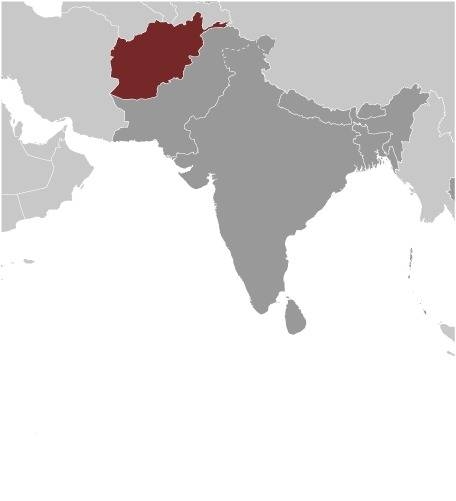
In February 2020, the United States (US) and the Taliban signed the “US-Taliban Agreement,” which contained commitments by the US related to the withdrawal from Afghanistan of military forces of the US and its allies, as well as commitments by the Taliban related to security. Following a US drawdown of virtually all of its troops, a summer 2021 Taliban offensive quickly overran the country.
The Taliban, which refer to themselves as the Islamic Emirate of Afghanistan, seized Afghanistan’s capital city of Kabul on August 15, 2021, following the successive capture of several provincial capitals and territory in early August. Following the collapse of the Government of Afghanistan, economic and political instability has resulted in the deterioration of basic service provision across the country, increased prices of staple foods and fuel, reduced household purchasing power that constrain the ability of Afghan households to meet basic needs.
Despite the Taliban’s taking control of much of Afghanistan, other armed groups challenge their authority. UN agencies and non-governmental organizations continue to be on the ground. However, the Taliban takeover has complicated the conditions for the provision of humanitarian assistance, and the humanitarian crisis in Afghanistan has grown even more complex and severe.
While armed conflict has declined significantly since 2021, instability and armed attacks, including the use of improvised explosive devices, continue to pose a significant risk to civilians, and chronic poverty and high unemployment, particularly among women, are expected to continue to drive humanitarian needs in 2025. The situation is compounded by internal displacement and continued cross-border returns from Iran and Pakistan, straining already limited resources.
The actions of the de facto authorities against women and girls in the country - their exclusion from public and political life, from economic activity and from education - exacerbate both the economic crisis throughout the country and, in particular, the security and humanitarian situation of the female population.
Girls are banned from education beyond the sixth grade, including attending institutions that train midwives and nurses. Most women are prohibited from working in either the public or private sector. They are barred from visiting public parks, gyms, and baths. The Taliban have mandated that women cover their faces in public and cannot travel long distances without a male guardian, making Afghanistan the only country in the world to impose such prohibitions on women and girls.
In early April 2023, the Taliban issued an order banning women from working for the United Nations in the country. The de facto authorities had already issued an order on December 24, 2022, prohibiting all female employees of national and international non-governmental organizations (NGOs) from going to work.
Despite facing sanctions and not being formally recognized by any country as the legitimate government of Afghanistan, the Taliban have refused to heed widespread domestic and international calls to respect women's rights and form an inclusive government.
Critics blame the Taliban's restrictions for contributing to the humanitarian crisis and discouraging foreign donors. The Taliban have rejected claims that their misogynistic policies are jeopardizing the flow of humanitarian aid to Afghanistan, saying donors are politicizing aid.
The United Nations warned in December 2024 that women and girls are bearing the brunt of an ongoing "dangerous erosion" of human rights in Afghanistan, attributing the situation to a deliberate failure by the Taliban. Taliban leaders have systematically deprived women and girls of their basic rights, including the right to education, work, freedom of movement and expression, and the right to live free from violence.
According to rights groups, lesbian, gay, bisexual and transgender people in Afghanistan and others who do not conform to rigid gender norms (LGBTQI+ people) have faced growing desperation and serious threats to their safety and lives since the new rulers took full control of the country.
The Taliban government is not officially recognized by any country, except Russia, and the UN has repeatedly rejected requests by Afghanistan's de facto authorities to represent the country internationally because of its restrictions on women's rights. The restrictions on women's human rights stem from dozens of decrees issued in recent years by the Taliban's reclusive supreme leader, Hibatullah Akhundzada, based on his strict interpretation of Islamic law.
In December 2024, the Afghan Ministry of Health abruptly ordered medical institutions across the country to stop enrolling female students, citing a new edict issued by Akhundzada. The move effectively shut down one of the last available avenues for girls to pursue higher education. In response, independent UN-appointed experts warned that Afghanistan's maternal and child health is already in crisis, with high rates of maternal and infant mortality. If implemented, the ban would exacerbate this crisis, with profound and long-lasting consequences.
The United Nations and global rights groups have repeatedly condemned the bans and called on the Taliban to reverse their actions and policies against women.
In January 2025, the Chief Prosecutor of the International Criminal Court (ICC) announced that he was seeking arrest warrants for senior Taliban leaders in Afghanistan accused of crimes against humanity, citing widespread persecution of the country's female population and LGBTQI+ population. Karim Khan said his office would soon file additional requests to arrest other senior Taliban members
Karim Khan identified the first suspects as Taliban supreme leader Hibatullah Akhundzada and his chief justice Abdul Hakim Haqqani. The Chief Prosecutor said both bear criminal responsibility for the crime against humanity of gender-based persecution. The persecution has been ongoing since August 2021, when the Taliban regained control of Afghanistan and imposed their strict interpretation of Islamic law.
In July 2025, the ICC announced that it had issued arrest warrants for Akhundzada and Haqqani. The Pre-Trial Chamber judges found reasonable grounds to believe that Akhundzada and Haqqani committed the crime of persecution against girls, women, and other individuals who do not conform to the Taliban's gender policies, as well as against individuals perceived as "allies of girls and women".
Also in July, the UN General Assembly adopted a resolution urging Afghanistan to respect human rights and comply with international law amid the deteriorating humanitarian crisis, rising number of returnees, and sustained impact of decades of conflict. The resolution passed with 116 votes in favor, two against (Israel and the United States), and 12 abstentions. The 193-member body had previously adopted a similar resolution in 2022.
Among others, the Assembly expressed “its serious concern about the grave, worsening, widespread and systematic oppression of all women and girls in Afghanistan by the Taliban, which […] has put in place an institutionalized system of discrimination, segregation, disrespect for human dignity and the exclusion of women and girls”, while recalling the obligations of Afghanistan under international law, in particular human rights, refugee and international humanitarian law.
Donations
Your donation for the Afghanistan emergency can help United Nations agencies, international humanitarian non-governmental organizations (NGOs) and their local partners to rapidly provide water, food, medicine, shelter and other aid to the people who need it most.
Emergency Appeals: Afghanistan Earthquake 2025
- UN Crisis Relief: Afghanistan earthquake
https://crisisrelief.un.org/en/afghanistan - UNHCR: Afghanistan earthquake
https://donate.unhcr.org/asia/en-as/afghanistan-situation - International Committee of the Red Cross: Earthquake in Afghanistan
https://www.icrc.org/en/donate/urgent-earthquake-afghanistan - International Federation of Red Cross and Red Crescent Societies (IFRC): Afghanistan: Earthquake 2025
https://donate.redcrossredcrescent.org/ifrc/afghanistan-earthquake/~my-donation?_cv=1 - Islamic Relief: Afghanistan earthquake
https://islamic-relief.org/appeals/afghanistan-earthquake-appeal/ - Concern Worldwide: Afghanistan earthquake
https://www.concern.net/donate/afghanistan-earthquake-appeal - WHO Foundation: Afghanistan Earthquake Appeal
https://donate.who.foundation/afghanistan-earthquake-appeal/
Emergency Appeals: Afghanistan Crisis
- UN Crisis Relief: Afghanistan crisis
https://crisisrelief.un.org/afghanistan-crisis - World Food Programme: Afghanistan emergency
https://www.wfp.org/emergencies/afghanistan-emergency - UNHCR: Afghanistan emergency
https://www.unhcr.org/afghanistan-emergency.html - International Rescue Committee (IRC): Afghanistan crisis
https://www.rescue.org/country/afghanistan - Islamic Relief Worldwide: Afghanistan emergency
https://islamic-relief.org/appeals/afghanistan-emergency/ - UNICEF Appeal: Afghanistan
https://www.unicef.org/emergencies/delivering-support-afghanistans-children - International Committee of the Red Cross: Afghanistan in crisis
https://www.icrc.org/en/donate/afghanistan - World Vision: Afghanistan appeal
https://www.wvi.org/emergencies/afghanistan - Disasters Emergency Committee UK: Afghanistan Crisis Appeal
https://www.dec.org.uk/appeal/afghanistan-crisis-appeal - International Organization for Migration (IOM): Afghanistan emergency
https://donate.iom.int/?form=afghanistan
To find other organizations to which you can donate, visit: Humanitarian Crisis Relief, Refugees and IDPs, Children in Need, Hunger and Food Insecurity, Medical Humanitarian Aid, Vulnerable Groups, Faith-Based Humanitarian Organizations, and Human Rights Organizations.
Further information
- UN OCHA: Afghanistan
https://www.unocha.org/afghanistan - ACAPS: Afghanistan Complex crisis
https://www.acaps.org/country/afghanistan/crisis/complex-crisis - International Crisis Group: Afghanistan
https://www.crisisgroup.org/asia/south-asia/afghanistan - European Civil Protection and Humanitarian Aid Operations: Afghanistan
https://civil-protection-humanitarian-aid.ec.europa.eu/where/asia-and-pacific/afghanistan_en - Human Rights Watch: World Report 2026: Afghanistan
https://www.hrw.org/world-report/2026/country-chapters/afghanistan - Human Rights Watch: World Report 2025: Afghanistan
https://www.hrw.org/world-report/2025/country-chapters/afghanistan - Human Rights Watch: World Report 2024: Afghanistan
https://www.hrw.org/world-report/2024/country-chapters/afghanistan - Amnesty International: World Report 2024/2025 Human rights in Afghanistan
https://www.amnesty.org/en/location/asia-and-the-pacific/south-asia/afghanistan/report-afghanistan/
Last updated: 04/02/2026