
The country
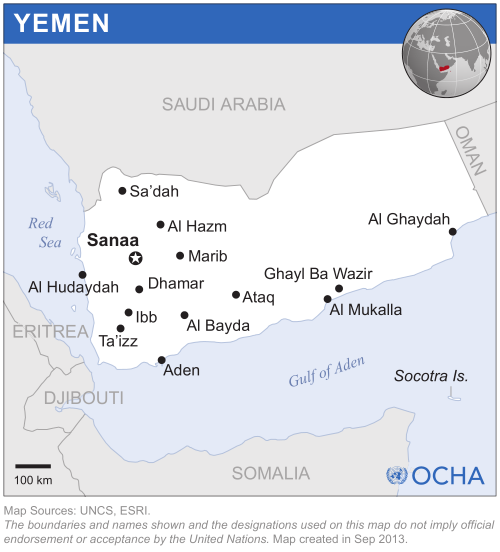
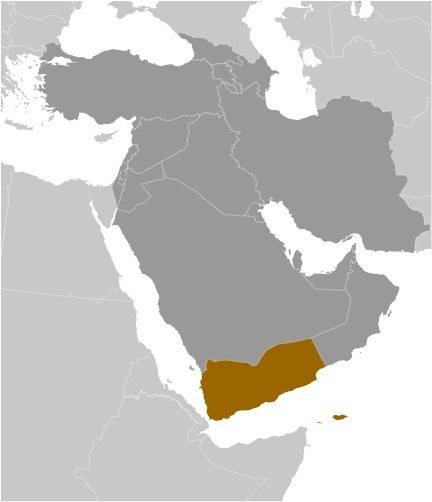
Yemen is a state in Western Asia, in the south of the Arabian Peninsula. Its national capital is Sanaa. The country has land borders with Saudi Arabia and Oman and shares maritime borders with Eritrea, Djibouti and Somalia. Yemen covers an area of 527,968 square kilometers. In 2026, the country has an estimated population of about 41.8 million people.
The humanitarian situation
Since the beginning of September 2026, ongoing hostilities in Yemen are forcing people to flee their homes, resulting in civilian casualties and putting already strained humanitarian operations under increasing pressure. This military escalation comes at a time when hunger, malnutrition, loss of resilience and collapsing humanitarian funding have already pushed millions of Yemenis deeper into crisis.
A staggering 22.3 million people require humanitarian assistance and protection in 2026, with the most vulnerable and marginalized groups, including women and girls, facing the greatest risk.
More than ten years of armed conflict in Yemen have caused tens of thousands of civilian casualties and forced millions to flee their homes, making Yemen one of the world’s largest humanitarian crises. While international attention has shifted to other global emergencies, Yemen remains one of the world's most severe and protracted humanitarian crises after more than a decade of war. A combination of economic decline, climatic shocks and regional escalation is driving humanitarian needs and fueling protection risks.
The unresolved conflict and climate-related disasters have already forced millions of people from their homes. The country faces one of the largest internal displacement crises in the world, with over 5 million people displaced within the country. In addition, Yemen hosts some 70,000 refugees and asylum seekers.
Moreover, Yemen is at the forefront of the global climate crisis, as recurring natural disasters such as floods and severe droughts threaten people's lives, safety and well-being. And the country is among the least prepared to mitigate or adapt to the impacts of climate-related natural hazards, which are becoming more frequent.
Extreme weather events related to climate change are growing more unpredictable and severe. The most prevalent is flooding, which typically occurs during the Kharif rainy season from July to September. Heavy rains during this season often cause flash floods, resulting in significant damage and loss to communities, as well as major displacement.
And the climate crisis keeps worsening. Floods, weather events and droughts affected 1.5 million people in 2025, washing away homes, livestock, and livelihoods. In 2024, exceptionally heavy seasonal rains and severe flooding caused widespread damage and displacement across Yemen, exacerbating the already dire humanitarian crisis. Hundreds of thousands were displaced, ander more than 1.3 million people affected by climate-related extreme weather events in 2024.
Years of conflict, economic collapse and climate shocks have pushed essential services in Yemen to the brink, leaving millions of people extremely vulnerable. Women and children, as well as internally displaced persons (IDPs), people with disabilities, migrants and refugees, are among those most at risk.
Yemen is one of the world’s most sever hunger crises, where populations are at imminent risk of catastrophic hunger (IPC Phase 5) or are already experiencing famine. The IPC, FEWSNET, the Hunger Hotspots Report, and the Global Hunger Index all categorize Yemen as one of the most food-insecure countries in the world.
Currently, over 53 percent of the total population—approximately 18 million people—are experiencing severe food insecurity, including 5.8 million who are facing emergency levels of hunger (IPC Phase 4). Additionally, 40,000 people are expected to face conditions of catastrophic food insecurity (IPC Phase 5).
Yemen’s nutrition crisis is also among the worst in the world. Currently, 2.5 million children under five and 1.3 million pregnant and breastfeeding women are acutely malnourished. Nearly half of all children under five are stunted. Some 600,000 children are severely malnourished, which is a life-threatening condition with mortality rates 11 times higher than those of healthy children.
With thousands of nutrition sites closed due to a lack of funding and vital supplies set to run out in 2026, the lives of hundreds of thousands of children are threatened. Without urgent action to stabilize food security and nutrition services, the hunger and malnutrition crises are set to worsen.
As hunger and malnutrition remain at alarming levels, women and children continue to bear the brunt of the crisis. In some areas, the situation has already become catastrophic, with people — especially children — dying from a lack of food, nutritional support, and life-saving health services.
Since 2025, Yemen's humanitarian response has been hit by an unprecedented funding shortfall due to severe cuts imposed by the United States and other major donors such as Germany. This severe shortfall has forced aid agencies to scale back critical services despite mounting needs, with devastating consequences: millions of people have been left without essential care and are now at heightened risk.
Furthermore, 40 percent of the country's health facilities are nonfunctional or partially functional, severely limiting the capacity for malnutrition screening and treatment. As the health system continues to collapse, an estimated 19.3 million people require urgent healthcare. Years of declining funding have left healthcare facilities with limited capacity to handle a new wave of conflict.
Health, water, sanitation, hygiene (WASH), shelter, and protection services are shrinking as essential systems collapse. Since January 2025, more than 450 health facilities have faced partial or imminent closure, affecting hospitals, primary health centers, and mobile clinics across 22 governorates, leaving 8.4 million people with limited access to basic care.
Water and sanitation are deteriorating for over 15 million people who are already water-insecure. With 17.4 million people lacking adequate sanitation and hygiene, preventable waterborne diseases are surging. An estimated 6.7 million people live in inadequate shelters, and over 13 million lack sufficient access to safe drinking water, which increases the risk of infectious diseases. Meanwhile, more than 4.5 million children are out of school. Limited access to critical services continues to worsen conditions for the most vulnerable groups, including women and children.
In Yemen, three women die daily from preventable pregnancy complications. Additionally, 6.2 million women and girls lack basic protection services, and 7 million people require urgent mental health support. Meanwhile, 6.2 million people need services for gender-based violence (GBV) as women and girls, especially those in displaced and marginalized communities, face escalating risks of GBV.
The country's health sector remains at risk of collapse, with most of its health facilities closed or only partially functional. According to the World Health Organization (WHO), the health crisis is exacerbated by an increase in measles, diphtheria, dengue fever, cholera, and polio outbreaks. The ongoing cholera outbreak and other epidemics create additional challenges for people who are already in desperate need of humanitarian assistance.
An estimated 23.1 million people are expected to require humanitarian assistance in 2026, of whom 10.5 million will be targeted, with 8.8 million prioritized as urgent recipients. The 2026 Humanitarian Response Plan (HRP) requests $2.1 billion, making it the fifth largest HRP globally. As of September, this year's HRP for Yemen is only 21 percent funded, with $444 million received thus far.
In 2025, at least 19.5 million people in Yemen were in need of humanitarian aid and protection. Among them were 9.8 million children in dire need of assistance. As of January 2026, only 28 percent of the $2.47 billion sought by the 2025 Yemen Humanitarian Needs and Response Plan had been received, significantly hindering the reach of critical, life-saving programs. The plan aimed to provide urgent humanitarian assistance to 10.5 million of the most vulnerable people in need.
The humanitarian situation remained dire or worsened over the previous year in large parts of the country. In 2024, 18.2 million people needed humanitarian assistance, which was 1.3 million more than in 2023. The 2024 Humanitarian Response Plan (HRP) requested US$2.7 billion to reach 11.2 million people in need across the country. As of January 2025, the 2024 HRP was only 53 percent funded. Despite shortfalls in funding and other challenges, 197 aid organizations reached more than 8 million people with life-saving assistance in 2024 - two-thirds of which were local Yemeni organizations.
The UN and partner organizations needed 4.3 billion US dollars in 2023 to support millions of people across the country. By January 2024, only 1.71 billion dollars had been received from international donors (coverage rate of 40 percent). Despite lack of funding and substantial access challenges, 211 humanitarian organizations delivered aid and protection services to an average of 8.9 million people every month in 2023, including internally displaced persons, returnees, marginalized communities and vulnerable host communities.
The UN had requested $4.27 billion in funding for the Yemen crisis in 2022. By the end of 2022, only 2.28 billion had been received from international donors (53 percent coverage rate). In 2022, aid organizations succeeded in delivering life-saving assistance, including food, clean water, shelter, protection and education, to nearly 11 million people across the country each month. More than 200 humanitarian organizations in all 333 districts of Yemen provided this humanitarian support.
 The security situation
The conflict between a Saudi-led coalition of Gulf countries and the ousted Government of Yemen against the Ansar-Allah movement - also known as the Houthi rebels - escalated in 2015 as Saudi Arabia began in March airstrikes against the Houthi and Houthi-affiliated forces.
Military support by the United States, the United Kingdom and France for the coalition fueled the conflict and aggravated the humanitarian crisis. The Houthi movement is allegedly supported by Iran.
The protracted armed conflict in Yemen has been raging for more than ten consecutive years. In 2020 and 2021, fighting continued on the ground in Yemen as the Houthi gained territory, and also conducted unmanned aerial vehicle (UAV) and missile attacks against targets in Saudi Arabia.
In March 2022, the Saudi-led coalition announced that it would cease all hostilities within Yemen, in order to facilitate political talks and peacekeeping efforts. Peace efforts gained momentum in April 2022, when the Houthi and coalition forces coordinated a two-month truce, the first nationwide ceasefire in years. In June 2022 the parties to the conflict in Yemen agreed to a United Nations’ proposal to renew the truce for an additional two months. At the last minute, in early August, the warring parties extended the ceasefire again for two months.
There was great hope that this would lead to a lasting peace in Yemen. But after it expired, the ceasefire has so far neither been extended nor expanded. Under the six-month UN-brokered truce, which lasted from April 2 to October 2, 2022, civilian casualties and the number of displaced persons declined dramatically.
While the UN-brokered ceasefire has not been renewed, there has been a fragile continuation of truce-like conditions for more than four years. As a result, the level of violence decreased and progress was made in political negotiations. No airstrikes or major military operations took place, although minor clashes continued to occur in frontline areas.
However, according to the United Nations Office for the Coordination of Humanitarian Affairs (OCHA), the number of displaced people rose since the ceasefire expired as the conflict flared up again. In the last quarter of 2022 and early 2023, increased fighting along the front lines led to the displacement of thousands. But over the course of 2023, the terms of the ceasefire was largely honored.
In mid-April 2023, the warring parties in Yemen released nearly 1,000 prisoners, raising hopes for a solution to the conflict. The development came a month after Saudi Arabia and Iran reached an agreement to restore relations. Following the diplomatic rapprochement between the two countries, hopes were growing in the region for a comprehensive political solution and an early end to Yemen's ten-year war.
Negotiations and talks between the warring parties and interested parties are continuing in the background, facilitated by the United Nations, but have neither led to a new ceasefire nor a peace agreement. The UN Secretary-General's Special Envoy for Yemen, Hans Grundberg, is continuing his peace efforts nonetheless.
In December 2023, after a series of UN-brokered meetings in Saudi Arabia and Oman, the warring parties in Yemen agreed on important steps to end the devastating civil war. The agreed measures include the implementation of a nationwide ceasefire, the improvement of living conditions in Yemen and the resumption of an inclusive political process under UN auspices, which should lead to lasting peace in Yemen.
The country's conflict has become increasingly internationalized, and the escalating cycle of strikes and counterstrikes is hampering prospects for peace, threatening to undo the improved security conditions for civilians since the 2022 ceasefire. A return to widespread violence would trigger further displacement, collapse essential services, and exacerbate the already dire humanitarian crisis - pushing Yemen further away from the peace it so desperately needs.
Since 2023, Ansar Allah has stepped up its attacks in Israel and continued to target international shipping in the Red Sea, prompting retaliatory strikes against Yemen by the United States and United Kingdom, as well as Israel. In 2024 and 2025, Houthi forces targeted Israel with drones and rockets, resulting in several civilian injuries. In response to these attacks, there have been numerous Israeli airstrikes on Hudaydah, a major entry point for humanitarian aid into impoverished Yemen, as well as on Sanaa International Airport.
Israeli airstrikes have damaged critical civilian infrastructure, including Sanaa International Airport and the Port of Hudaydah, disrupting the ability to unload humanitarian aid. While regional tensions have dominated the headlines, there has been escalation on several fronts.
Military escalation in the country, following the US, UK and Israeli airstrikes on Houthi targets, risks worsening the existing grave situation for civilians. A further deterioration could undermine Yemen's fragile peace process and longer-term recovery from one of the world’s worst humanitarian crises. As armed conflict in the Middle East intensifies, Yemen risks being drawn further into it. Without a lasting political solution in the country and a lasting resolution to the Gaza war, the situation remains precarious.
According to the UN, the arbitrary detention of humanitarian workers and false charges against them continue to severely hamper the ability of aid agencies to provide life-saving humanitarian assistance in Yemen. Since June 2024, UN staff, NGO workers and others have been arbitrarily detained by the Houthis. Some UN staff have also been detained since 2021 and 2023.
Ansar Allah is reportedly currently holding 53 UN staff members. The UN has warned that the intensifying crackdown is crippling humanitarian operations and endangering millions of lives. These detentions have made delivering humanitarian assistance to Houthi-controlled areas nearly impossible, directly affecting millions of people in need by restricting their access to lifesaving assistance.
In December 2025, forces affiliated with the Southern Transitional Council (STC), a separatist group, advanced on the two resource-rich governorates of Hadramawt and al-Mahra, rapidly seizing control from the Saudi-backed government and dramatically shifting the power balance in southern Yemen. In January, with Saudi air support, government forces recaptured control of al-Mahra and parts of Hadramawt following the retreat of STC forces. The STC is reportedly backed by the United Arab Emirates (UAE) and seeks an independent South Yemen.
The period of relative calm in Yemen ended abruptly in September 2026. The situation in Yemen had already become increasingly tense in recent months. In connection with the war initiated by Israel and the United States against Iran on February 28, the Houthis attacked Israel at the end of March.
This prompted renewed concerns that Yemen would be drawn into the escalating conflict. In August, UN envoy Grundberg warned that Yemen faced "a more serious risk of returning to large-scale conflict than at any point since the 2022 UN-mediated truce."
That risk has now become a harsh reality, with intensified fighting across multiple front lines. The Houthis gained control of the port city of Mokha, roughly 75 kilometers from the Bab el-Mandeb strait. These developments followed weeks of escalation, reminiscent of the extensive attacks the Houthis launched in the cities of Taiz and Hudaydah in early September.
Escalating hostilities in Yemen are forcing people to flee their homes, causing civilian casualties, and putting already-strained humanitarian operations under mounting pressure. Since early September 2026, at least 130,000 people have been displaced by renewed fighting.
Donations
Your donation for the Yemen emergency can help United Nations agencies, international humanitarian non-governmental organizations (NGOs) and their local partners to rapidly provide water, food, medicine, shelter and other aid to the people who need it most.
- UN Crisis Relief: Yemen crisis
https://crisisrelief.un.org/yemen-crisis - World Food Programme: Yemen crisis appeal
https://www.wfp.org/emergencies/yemen-emergency - UNICEF: Yemen Crisis Appeal
https://www.unicef.org/emergencies/yemen-crisis - Oxfam International: Crisis in Yemen
https://www.oxfam.org/en/what-we-do/emergencies/crisis-yemen - Save the children international: Yemen Crisis Appeal
https://www.savethechildren.net/what-we-do/emergencies/yemen-crisis - Islamic Relief Worldwide: Yemen crisis
https://islamic-relief.org/appeals/yemen-crisis/ - UNHCR: Yemen emergency
https://www.unhcr.org/yemen-emergency.html - International Organization for Migration (IOM): Yemen emergency
https://donate.iom.int/?form=yemen
To find other organizations to which you can donate, visit: Humanitarian Crisis Relief, Refugees and IDPs, Children in Need, Hunger and Food Insecurity, Medical Humanitarian Aid, Vulnerable Groups, Faith-Based Humanitarian Organizations, and Human Rights Organizations.
Further information
- UN OCHA: Yemen
https://www.unocha.org/yemen - Council on Foreign Relations: Background Yemen Crisis
https://www.cfr.org/backgrounder/yemen-crisis - USA for UNHCR: Yemen Crisis Explained
https://www.unrefugees.org/news/yemen-crisis-explained/ - European Civil Protection and Humanitarian Aid Operations (ECHO): Yemen
https://civil-protection-humanitarian-aid.ec.europa.eu/where/middle-east-and-northern-africa/yemen_en - International Crisis Group: Yemen
https://www.crisisgroup.org/middle-east-north-africa/gulf-and-arabian-peninsula/yemen - ACAPS: Yemen complex crisis
https://www.acaps.org/country/yemen/crisis/complex-crisis - Human Rights Watch World Report 2026: Yemen
https://www.hrw.org/world-report/2026/country-chapters/yemen - Human Rights Watch World Report 2025: Yemen
https://www.hrw.org/world-report/2025/country-chapters/yemen - Human Rights Watch World Report 2024: Yemen
https://www.hrw.org/world-report/2024/country-chapters/yemen - Amnesty International World Report 2025/2026: Yemen
https://www.amnesty.org/en/location/middle-east-and-north-africa/yemen/report-yemen/
Last updated: 09/21/2026