
The country
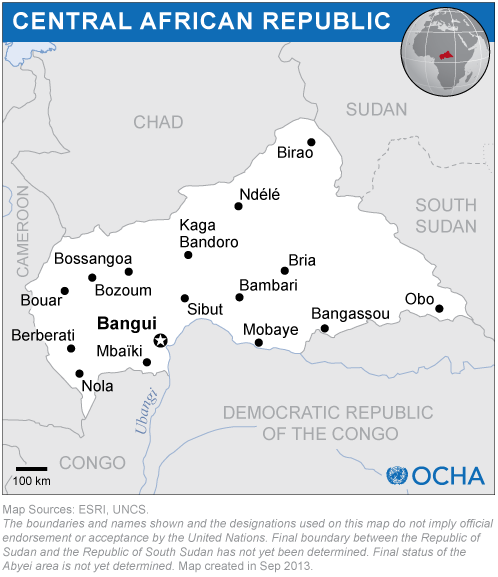
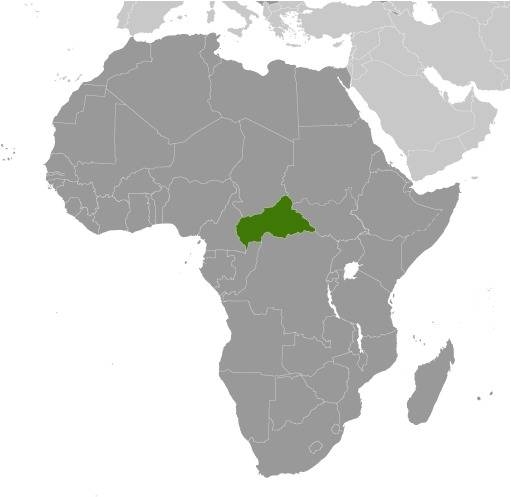
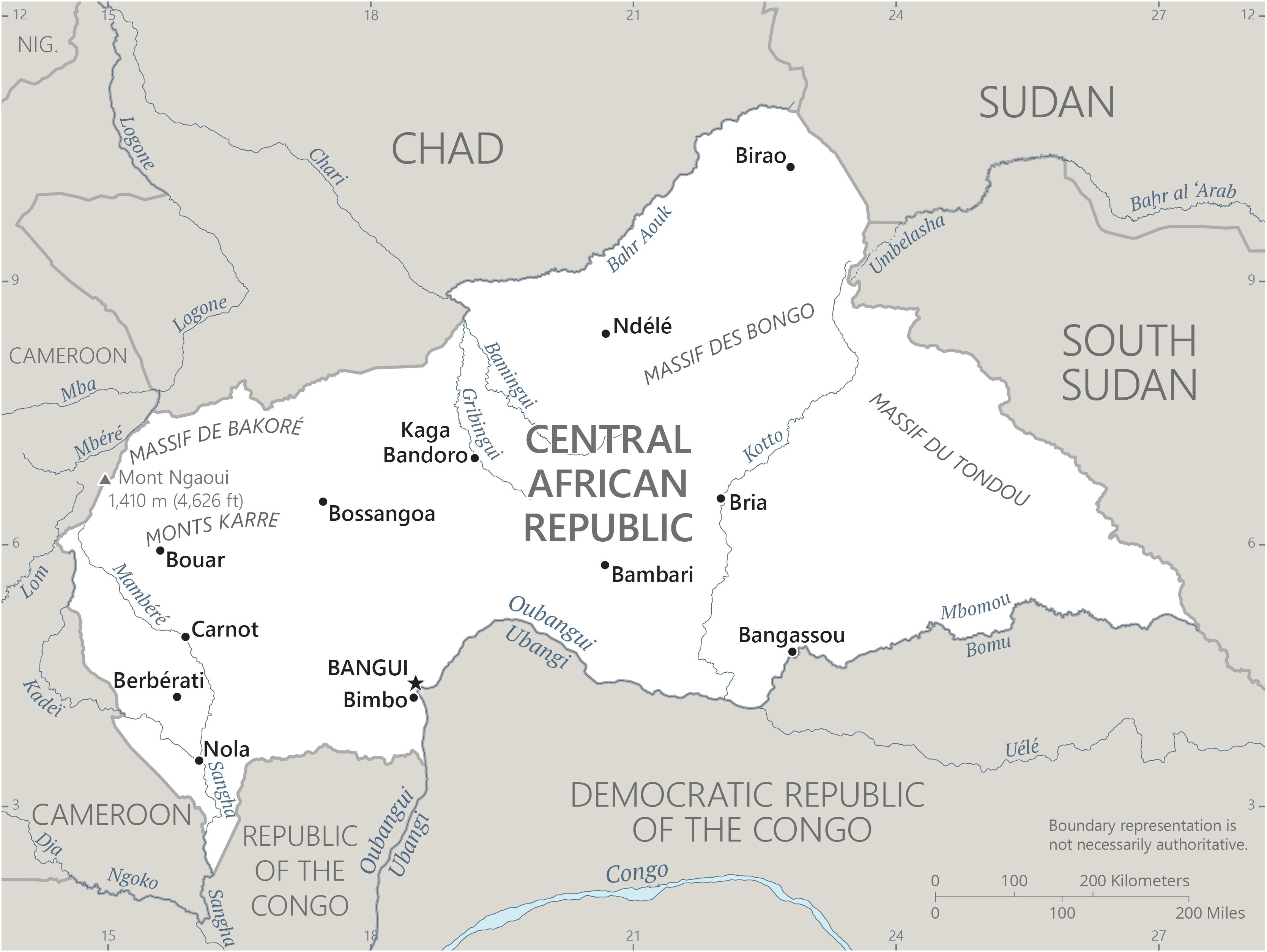
The Central African Republic (CAR), gaining independence from France in 1960, is a landlocked country within the interior of the African continent. The central African country borders Chad, Sudan, South Sudan, the Democratic Republic of Congo, the Republic of Congo and Cameroon. Its capital is Bangui. The Central African Republic covers a land area of 622,984 square kilometers. As of 2026, the country has an estimated population of around 6.6 million people. CAR is one of the world’s poorest and least developed states.
The humanitarian situation
The Central African Republic (CAR) has been one of the world's most neglected humanitarian crises for several consecutive years. Ravaged by violence since 2012, the country remains in dire need of support. Conflict, epidemics, and climate disasters continue to disrupt the lives of people in CAR, leaving 2.3 million people — more than one-third of the population — in need of humanitarian aid this year.
Over the past fourteen years, CAR has been affected by armed conflict and the continued presence of militant groups. Although some areas have seen security improvements, the overall situation remains alarming, particularly in the northwest and east and, to a lesser extent, in the center. Clashes between parties to the conflict persist, as do attacks on civilian infrastructure, including schools and healthcare facilities such as hospitals.
Civilians continue to experience violence, including gender-based violence, and other human rights and international humanitarian law violations, as well as the impact of natural disasters linked to climate change, such as flooding. All of these factors contribute to new displacement.
Currently, one in six Central Africans is displaced, either internally or externally, primarily to neighboring countries, due to conflict, violence, a lack of basic services, and extreme weather events. There are over 1.1 million displaced people, including more than 674,000 refugees in neighboring countries and approximately 447,000 internally displaced persons (IDPs), with 85 percent living with host families. As of January 2026, CAR host some 55,000 refugees. Among them are more than 40,000 Sudanese refugees have crossed the border into the country since the start of the war in Sudan in 2023.
While insecurity and violence against civilians continue to force Central Africans to flee their homes, humanitarian and development actors are helping many IDPs and refugees to resume a normal life after several years of displacement. In recent months more than 20,000 people have returned to their areas of origin or choice. Since 2022, an improved security situation allowed hundreds of thousands of displaced people to be integrated locally or returned to their homes.
However, as one-sixth of the population has been forced to flee, CAR remains the country with the third-highest level of forced displacement in Africa, after Sudan and South Sudan. Most refugees have fled to Cameroon, the Democratic Republic of Congo, and Chad.
CAR has one of the highest proportions of critically food-insecure people in the world. According to the latest Integrated Food Security Phase Classification (IPC) analysis, approximately 1.92 million people currently face high levels of acute food insecurity, categorized as IPC Phase 3 or worse. This includes 269,000 people experiencing emergency levels of food insecurity (IPC Phase 4) and nearly 1.66 million experiencing crisis levels (IPC Phase 3).
The main drivers of hunger in CAR remain armed conflict, particularly in the north and south of the country, frequent displacement, and poor agricultural production. The IPC analysis indicates that the most affected households include farmers with poor harvests and limited carry-over stocks, as well as IDPs and refugees living in host communities.
From April to August 2026, the lean season, ongoing conflict and high food prices are expected to exacerbate the situation, with around 2.29 million people projected to experience high levels of acute food insecurity. This includes an estimated 400,000 individuals facing emergency levels and over 1.9 million individuals facing crisis levels of acute hunger.
Meanwhile, over 228,000 children under five are suffering from or are expected to suffer from acute malnutrition, including over 61,500 children with severe acute malnutrition (SAM). The IPC predicts that the nutritional situation will deteriorate significantly in the coming months due to high rates of diseases such as diarrhea, malaria, and acute respiratory infections.
Since mid-April 2023, following the war that erupted in Sudan between the Sudanese Armed Forces (SAF) and the Rapid Support Forces (RSF), CAR has been hosting tens of thousands of Sudanese refugees, most of whom arrive through the Am-dafock border crossing in the Vakaga region of CAR. As of February 2026, more than 47,000 refugees and returnees have arrived from Sudan.
CAR has one of the lowest life expectancies in the world at only 54 years. Infant mortality rates are among the highest in the world, and pregnant women are at high risk of death or serious illness due to a lack of gynecologists. According to the World Health Organization (WHO) and the CAR Ministry of Health, less than half of health care facilities in the country are fully operational, and there are 0.6 doctors for every 10,000 people - one of the lowest ratios in the world.
Flooding from rain and rivers poses a constant threat to many parts of the country, overshadowing other types of humanitarian shocks and vulnerabilities. Last year, flooding affected more than 7,000 people, following at least 32,000 people affected by flooding the previous year. In 2023, more than 85,000 people were affected by floods, a slight decrease compared to the previous year. Over 100,000 people were exposed to flooding in 2022.
The 2026 Humanitarian Response Plan (HRP) seeks US$264 million — the lowest requested amount in recent years — to help 1.3 million of the most vulnerable people in the country. Although humanitarian needs remain staggeringly high, aid organizations are forced to focus on the most urgent, life-saving priorities due to a global collapse in funding.
In 2025, humanitarian agencies aimed to assist 1.8 million of the most vulnerable Central Africans, out of 2.4 million people in need of humanitarian aid, for which they required $326 million. However, they only received $122 million, just over one third of the required funding, enabling them to provide life-saving assistance to 887,000 people, 50 percent of their target
Consequently, many communities were left without the critical support they needed. The decline in funding in 2025 also severely affected the operational presence of aid agencies, resulting in the closure of 116 humanitarian bases, including those in areas with the highest levels of vulnerability.
In 2024, there were 2.8 million people in need of humanitarian assistance and protection in the Central African Republic, a decrease of 18 percent compared to 2023. In that year, 3.4 million people, including around 1.4 million children, were in need of humanitarian relief. In 2024, humanitarian agencies reached 1.7 million women, men and children, according to OCHA.
The 2024 Humanitarian Response Plan (HRP) for the Central African Republic sought US$ 367.7 million to support 1.9 million of the most vulnerable people that year. As of March 2025, the Plan was only 62 percent funded.
In 2023, humanitarian organizations in the Central African Republic planned to assist 2.4 million most vulnerable people. The United Nations and humanitarian partners had appealed for US$ 533 million to help those in need. As of January 2024, the 2023 HRP for the Central African Republic was only 56 percent covered. Despit this humanitarian agencies provided life-saving assistance to 2 million women, men and children. In 2022, humanitarian actors delivered aid to 1.9 million people.
 The security situation
The security situation in the Central African Republic remains volatile and complex. Although large-scale fighting has subsided in some areas following ceasefire agreements in 2025, underlying instability persists, fueled by armed groups and ongoing political tensions.
Despite efforts to promote peace and reconciliation, including international support and peace agreements, the country continues to grapple with the influence of armed groups and external actors. It remains heavily impacted by militia activity, foreign mercenaries, and power struggles between factions.
The 2013 seizure of the capital by armed groups and the ousting of President François Bozizé sparked a prolonged crisis. Although elections in 2016 and a peace agreement in 2019 showed some progress, underlying issues such as armed group control and regional violence have persisted. Elections in 2020 exacerbated the situation, leading to a resurgence of violence.
General elections were held on December 28, 2025. Incumbent President Faustin-Archange Touadéra, who was first elected in 2016, was returned to power for a third term. The vote was marked by low turnout, as well as concerns about credibility and inclusiveness raised by opposition parties and election observers.
In 2014, the UN Security Council authorized the deployment of a multidimensional UN peacekeeping mission with the primary objective of protecting civilians.
The United Nations Multidimensional Integrated Stabilization Mission in the Central African Republic (MINUSCA) is mandated to facilitate humanitarian assistance, promote and protect human rights, support justice and the rule of law, and advance disarmament, demobilization, reintegration, and repatriation processes.
As of 2026, MINUSCA continues to have a presence in the country. The UN Security Council has extended its mandate through November to support stabilization, the protection of civilians, and electoral security.
In April 2025, a ceasefire agreement was reached between the major armed factions, including the Union for Peace in the Central African Republic (UPC) and the 3R (Return, Reclamation, Rehabilitation) group. Some of these factions disbanded their armed and political wings later that year.
Russian mercenaries from the Russian Africa Corps (formerly the Wagner Group) have been deployed to the country. Although they are officially present to serve as military instructors, the UN has identified cases in which these mercenaries have engaged in combat and have been implicated in human rights abuses and violations of international humanitarian law.
Since 2022, the Central African Armed Forces (FACA) have consolidated control over major urban centers. In rural areas, however, armed groups continue to engage in robbery, looting, illegal taxation, and extortion. Both armed groups and government forces are involved in violent incidents and human rights abuses against civilians, including the abduction, recruitment and use of children as soldiers, sexual violence, and attacks against hospitals and schools. New displacement occurs in areas affected by violent clashes.
Attacks and violence against humanitarian workers and UN peacekeepers persist. Although relief agencies are working to support populations affected by the conflict, ongoing insecurity and logistical constraints continue to hinder humanitarian operations, particularly in remote areas of the country. The CAR remains one of the most dangerous countries for humanitarian workers.
Donations
Your donation for the Central African Republic emergency can help United Nations agencies, international humanitarian non-governmental organizations (NGOs) and their local partners to rapidly provide water, food, medicine, shelter and other aid to the people who need it most.
- UN Crisis Relief: Central African Republic Emergency
https://crisisrelief.un.org/car-more-than-half-need-urgent-aid - UNICEF Appeal: Central African Republic
https://www.unicef.org/appeals/car - International Rescue Committee (IRC): Central African Republic Appeal
https://www.rescue.org/country/central-african-republic - UNHCR: Donate to help refugees in the Central African Republic
https://donate.unhcr.org/int/en/central-african-republic
To find other organizations to which you can donate, visit: Humanitarian Crisis Relief, Refugees and IDPs, Children in Need, Hunger and Food Insecurity, Medical Humanitarian Aid, Vulnerable Groups, Faith-Based Humanitarian Organizations, and Human Rights Organizations.
Further Information
- Concern Worldwide: The Central African Republic crisis explained
https://www.concernusa.org/story/central-african-republic-crisis-explained/ - UN OCHA: Central African Republic: Situation Report
https://reports.unocha.org/en/country/car/ - ACAPS: Central African Republic Complex crisis
https://www.acaps.org/country/car/crisis/complex-crisis - European Civil Protection and Humanitarian Aid Operations (ECHO): Central African Republic
https://civil-protection-humanitarian-aid.ec.europa.eu/where/africa/central-african-republic_en - UNHCR: Central African Republic Situation
https://www.unhcr.org/central-african-republic-situation.html - UNICEF: Crisis in Central African Republic
https://www.unicef.org/emergencies/crisis-central-african-republic - UN Multidimensional Integrated Stabilization Mission in the Central African Republic (MINUSCA)
https://minusca.unmissions.org/en - International Crisis Group: Central African Republic
https://www.crisisgroup.org/africa/central-africa/central-african-republic - Human Rights Watch: World Report 2026: Central African Republic
https://www.hrw.org/world-report/2026/country-chapters/central-african-republic - Human Rights Watch: World Report 2025: Central African Republic
https://www.hrw.org/world-report/2025/country-chapters/central-african-republic - Human Rights Watch: World Report 2024: Central African Republic
https://www.hrw.org/world-report/2024/country-chapters/central-african-republic - Amnesty International: Report 2024/2025: Human Rights in Central African Republic
https://www.amnesty.org/en/location/africa/west-and-central-africa/central-african-republic/report-central-african-republic/
Last updated: 12/02/2026