
The country
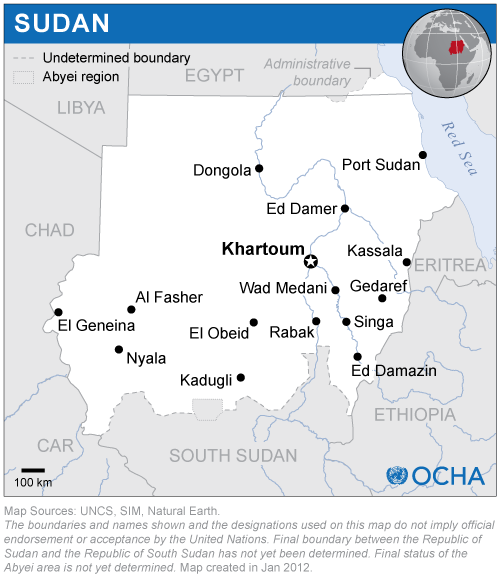
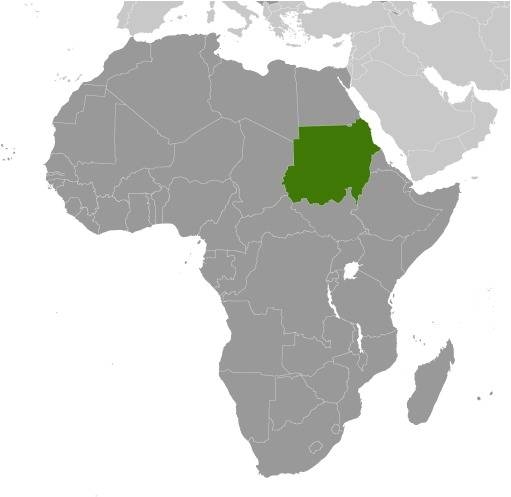
Sudan, gaining independence from the United Kingdom in 1956, is a state in Northeast Africa with access to the Red Sea. The country shares land borders with Egypt, Eritrea, Ethiopia, South Sudan, the Central African Republic, Chad, and Libya. Its capital is Khartoum. Sudan covers an area of 1,861,484 square kilometers. As of 2026, the country has an estimated population of around 51.7 million people.
The humanitarian situation
The scale of the humanitarian catastrophe unfolding in Sudan is unprecedented. On April 15, 2023, conflict broke out between the paramilitary Rapid Support Forces and the Sudanese Armed Forces, causing widespread displacement, hunger, and the world's largest humanitarian crisis. After more than three years of conflict, more than 14 million people are still displaced as a result of the ongoing war and earlier conflict. In 2026, the number of people in need of humanitarian assistance stands at 33.7 million people - two-thirds of Sudan's population.
The catastrophic humanitarian situation in Sudan hardly receives the international political and media attention it deserves. The United Nations has warned that hunger, disease and displacement threaten to destroy Sudan as war spreads throughout the country, fueling a humanitarian emergency of “epic proportions”. A protracted conflict in Sudan could tip the entire region into a humanitarian catastrophe.
April 15, 2026, marked the third anniversary of the horrific war in Sudan, which has created not only the world's largest humanitarian crisis, but also the world's largest hunger crisis, and the world's largest displacement crisis. The ongoing conflict has claimed at least 150,000 lives. The actual death toll is believed to be much higher.
Fighting continues in several parts of the country where essential services have collapsed, and humanitarian access remains restricted in many areas. Civilians are bearing the brunt of the fighting, which has spread across Sudan. The conflict between Sudan’s military headed up by General Abdel Fattah Burhan and the paramilitary group Rapid Support Forces (RSF) led by General Mohammed Hamdan Dagalo erupted after months of rising tensions over the country's political future and the RSF's planned integration into the national army.
The violence that exploded between the warring parties has destroyed much of the essential infrastructure in the capital, Khartoum, pushing health and financial systems to near collapse, leaving people without access to money or essential goods. Fierce fighting continues in the western region of Darfur, the central Kordofan region, and Blue Nile State. The clashes prevent people from accessing food, water, fuel, and medical care for their families. The ongoing fighting in Sudan is having a devastating impact on Sudanese civilians. Many people are in urgent need of medical and other humanitarian assistance.
Over three years of war have intensified suffering to record levels. Civilians face an unprecedented protection crisis with systematic atrocities and disregard for International Humanitarian Law (IHL). Some 22.4 million people are in need of protection, almost double last year’s figure. At leat 12 million people are at risk of Gender-Based Violence (GBV) – a 350 percent rise since the conflict started.
According to the World Health Organization (WHO), nearly 15 million people need urgent health assistance to survive. Less than 25 percent of health facilities are functioning in the Sudanese states most affected by the war, and only 45 percent of such facilities are fully functional in other states. Hospitals that remain fully or partially functional risk closing for lack of medical staff, supplies, water and electricity.
Humanitarian needs in Sudan were already at record levels before the situation deteriorated, with some 15.8 million people requiring humanitarian assistance at the beginning of 2023. The growing needs in Sudan were driven by political instability following the military takeover on October 25, 2021, a socioeconomic crisis, insecurity and violence, displacements, floods, drought and disease outbreaks.
Attacks on health care continue to be reported across the country. Since the outbreak of war in April 2023, WHO has verified 205 attacks on health care - including on health facilities, ambulances and transport, assets, patients and health workers - resulting in 1,924 deaths and 529 injuries (as of February 2026). The real numbers of attacks on health care are estimated too be much higher.
Multiple disease outbreaks are occurring simultaneously, including cholera, dengue, malaria, measles, hepatitis E, and diphtheria. As of November 2025, there had been over 124,000 suspected cholera cases, and 3,355 deathsreported in the country since the outbreak began in late July 2024. Although case numbers in Khartoum State have declined, the outbreak has spread to all of Sudan’s 18 states.
The World Health Organization (WHO) warns that the spread of cholera to the states of North, South, West, and East Darfur, as well as North, South, and West Kordofan, is particularly concerning, given the limited access and already dire humanitarian and health crises in these states.
According to the 2026 Humanitarian Needs and Response Plan (HNRP), Sudan remains the country with the most people in need globally: staggering 33.7 million. Those in need include more than 20 million children. The HNRP targets 20.4 million people and seeks US$2.9 billion. About 14 million Sudanese are urgently prioritzed for life-saving assistance, requiring $2.1 billion. As of May 2026, the HNRP is only 21 percent funded. The widening gap between rising needs and shrinking resources undermines both emergency response efforts and medium-term solutions.
To address the mounting needs of refugees, returnees, and host communities, the United Nations Refugee Agency (UNHCR) and its humanitarian partners have requesteds $1.6 billion to provide food, shelter, healthcare, protection, and dignified assistance to 5.9 million people in seven countries bordering Sudan by the end of this year.
The Sudan Regional Refugee Response Plan (RRP) for 2026, prioritizes aid for an estimated 470,000 new refugees expected to arrive in neighboring countries this year, as well as thousands more who remain in border areas and have received only the most basic assistance since their arrival. As of May, the RRP is only 10 percent funded.
Before the severe fighting erupted, Sudan hosted about 1.2 million refugees, one of the largest refugee populations in Africa. South Sudanese represented more than 70 percent of the refugees (758,000) in Sudan, followed by 135,000 Eritrean refugees (11 percent) and 131,000 refugees from Ethiopia (11 percent). Some 3.8 million Sudanese were internally displaced, mostly in the Darfur region that has experienced a volatile security situation since 2003.
As of May 2026, more than 9 million women, men and children are internally displaced, including 2.4 million who had been displaced before April 2023, making Sudan the world's largest internal displacement crisis. At least 500,000 Sudanese had fled to neighboring countries before the escalation of the conflict. The total number of Sudanese refugees is now estimated at more than 5 million. Overall, more than 14 million are currently displaced by conflict in Sudan. Despite four million returns since 2025, Sudan remains the world’s largest displacement crisis.
Sudan is also experiencing an unprecedented hunger crisis which is now in its fourth year. The situation is characterized by widespread hunger and a significant surge in acute malnutrition. According to the latest Integrated Food Security Phase (IPC) analysis, approximately 19.5 million people — two out of every five in Sudan — are currently experiencing crisis-level acute hunger or worse nationwide.
Of those currently experiencing high levels of acute food insecurity, more than 5 million are experiencing emergency levels (IPC Phase 4), while a further 14 million are facing crisis levels (IPC Phase 3). Conditions are expected to deteriorate further during the lean season between June and September.
The IPC analysis also reveals that 135,000 individuals across 14 hotspots in North Darfur State, South Darfur State, and South Kordofan State are currently experiencing catastrophic conditions (IPC Phase 5). These individuals are at risk of famine in the coming months should the conflict intensify, access to food becomes more limited, health services deteriorate, or displacement increases.
Although the IPC did not identify any areas currently experiencing famine, the Famine Review Committee (FRC) emphasizes that the situation remains extremely concerning due to displacement and the systematic obstruction of food, healthcare, water, and livelihoods in areas of ongoing conflict. The FRC is gravely concerned about the dire situation in Sudan, particularly regarding the outlook in the coming months in the At Tina, Um Baru, and Kernoi areas of North Darfur State.
Um Baru and Kernoi recorded critical levels of malnutrition in December 2025. Acute malnutrition is expected to remain at extremely high levels in these localities, and additional areas are at risk of deteriorating, particularly besieged areas and areas with internally displaced people.
Sudan is also facing a severe nutrition crisis, with an estimated 825,000 children under five suffering from severe acute malnutrition. This is a seven percent increase compared to 2025 and 25 percent higher than pre-conflict levels recorded between 2021 and 2023. Between January and March of this year alone, nearly 100,000 children were admitted for treatment of SAM, which can be fatal if not treated urgently.
The worst conditions are in the areas most affected by the fighting and where conflict-displaced people are concentrated. The situation is particularly dire for those trapped in conflict zones, including North Darfur State, and in the Kordofan region.
Before the situation deteriorated, a quarter of Sudan's population - 11.7 million people - were severely food insecure. Over 3 million children under five suffered from acute malnutrition in the country, with an estimated 650,000 children under five suffering from severe acute malnutrition.
Insecurity, access restrictions and scarce funding are limiting the ability of aid agencies to respond to humanitarian needs in Sudan. Without a cessation of fighting and unimpeded humanitarian access, the crisis is expected to worsen dramatically in the coming months and could destabilize the entire region. Neighboring countries have already experienced large influxes of refugees from Sudan.
The 2025 HNRP sought US$4.2 billion to address the most urgent and critical needs of nearly 21 million of those most vulnerable inside the country. This was the highest number of people in any UN coordinated plan last year. At the end of last year, the HNRP was only 40 percent covered by funding. In 2025, humanitarian organizations reached 20 million people in Sudan with at least one form of humanitarian assistance, with a target of 20.9 million people for the entire year.
The 2025 Regional Refugee Response Plan (RRP) sought $1.8 billion to support 4.8 million people, including refugees, returnees and host communities in the Central African Republic, Chad, Egypt, Ethiopia, Libya, South Sudan and Uganda. At the end of 2025, only 25 percent had been raised for the RRP.
In 2024, the United Nations and its humanitarian partner organizations called for US$4.1 billion to help millions of people in the country and hundreds of thousands fleeing to neighboring countries. As the death toll mounted, humanitarian needs soared, and displacement grew, the UN launched response plans to provide food, health care, shelter, protection and other critical assistance.
Despite severe funding shortfalls and humanitarian access constraints, aid agencies reached more than 15.6 million people across Sudan in 2024. Humanitarian organizations working in neighboring countries provided life-saving assistance, delivering food to more than one million people, medical assistance to half a million, and protection services to more than 800,000.
To provide humanitarian assistance inside Sudan, the UN and partners asked for $2.7 billion to help 14.7 million people in 2024, according to the Humanitarian Response Plan (HRP). For those who have fled the country, the UN Refugee Agency (UNHCR) had requested an additional $1.4 billion to support displaced people in five countries bordering Sudan, according to the 2024 RRP.
As of March 2025, the 2024 HNRP was only 68 percent funded, while only 31 percent has been raised for the Regional Refugee Response Plan. The revised 2023 Humanitarian Response Plan for Sudan called for 2.6 billion US Dollar to provide lifesaving assistance to an estimated 18.1 million people by the end of the year. As of December, the HRP was only 39 percent funded. Nevertheless, between April and December 2023, humanitarian agencies reached at least 8.1 million people with humanitarian assistance inside the country.
In August 2023, UNHCR had revised its regional response, extending the original six-month plan through the end of the year. The 2023 Sudan Emergency RRP asked for 1 billion US Dollar to provide essential aid and protection to people fleeing to five neighboring countries. As of December 2023, only 7 percent for the Regional Refugee Response Plan had been raised.
In 2022, the United Nations had appealed for 1.94 billion US Dollar in funding for the Sudan crisis. As of December 2022, only 837 million US Dollar had been received from donors (43 percent coverage).
 The security situation
In April 2019, a civilian uprising grew out of protests against high prices for bread, fuel shortages, and other economic issues. On April 11, the Sudanese military overthrew long-term President Omar al-Bashir in support of a popular revolution, and subsequent political uncertainty contributed to heightened humanitarian security and protection concerns. In August 2019, a signed constitutional declaration laid out arrangements for a civilian-led transitional government for a 39-month period, with Abdalla Hamdouk appointed as Prime Minister.
However, on October 25, 2021, the military took over the government and arrested the civilian leadership. On November 21, Hamdouk was reinstated as prime minister in a power-sharing agreement with military leader Abdel Fattah al-Burhan, but resigned on January 2, 2022. Due to the military coup and the de facto suspension of the transition to civilian rule, Sudan remained in a political stalemate.
The October 2021 military takeover derailed Sudan’s democratic transition and also upended the 2020 Juba Peace Agreement between the transitional government and armed groups in the country. The ensuing and escalating violence, particularly in the Darfur region, displaced more than 700,000 Sudanese in 2021. 2022 witnessed an increase in the number and intensity of violent incidents throughout Sudan. As of December 2022, 300,000 people were freshly displaced due to conflict.
On December 5, 2022, more than fifty Sudanese political forces, civil society groups and the current military leaders signed a power-sharing deal that raised hopes of ending violent clashes between security forces and protesters. The agreement called for immediate security and military reforms which include combining all militias, including the Sudan paramilitary Rapid Support Forces (RSF), into one unified army.
The agreement also stressed the need to resolve issues regarding transitional justice in the country. Officials from the United Nations, African Union and European Union congratulated the Sudanese parties for reaching the agreement and urged them to engage in genuine dialogue to complete the remaining tasks that would lead to the formation of a transitional government.
On April 15, 2023, fierce fighting between Sudan's armed forces and the rival Rapid Support Forces erupted in the capital and other areas outside Khartoum, shattering hopes for a transition to democracy and stoking fears of a wider conflict. The clashes soon spread across Sudan.
Since fighting broke out more than 37 months ago, at least 150,000 peope have been killed. But the real death toll is likely to be much higher. According to a study by the Sudan Research Group at the London School of Hygiene and Tropical Medicine, more than 60,000 people died in Khartoum State alone, where fighting began in 2023. Many more people have died elsewhere in the country, particularly in the western region of Darfur, where numerous accounts of atrocities and ethnic cleansing have been reported.
A UN report says that up to 15,000 people have been killed in ethnic motivated violence in El Geneina, the capital of West Darfur state, between April and June 2023. An estimated death toll between 10,000 and 15,000 men, women, and children in El Geneina was attributed to intelligence sources.
Since the beginning of the clashes between the two warring factions, more than 16 million people had been displaced. With some 4 million people returning to their places of origin in Al Jazirah, Sennar, and Khartoum in recent months, the total number of displaced people has dropped slightly to more than 14 million for the first time since the war began. However, the situation remains highly volatile.
While about 7 million people - Sudanese and refugees already living in the country - are currently displaced within Sudan due to the war, more than 4.5 million women, men and children have sought refuge in other countries. The majority of the internally displaced - 55 percent - are children under the age of 18. In total, more than 25 percent of Sudan's population has fled their homes, either internally or across borders, due to the ongoing war.
Most Sudanese seek refuge in the seven countries bordering the northeastern African nation, including Egypt, South Sudan, Chad, Ethiopia, Libya and the Central African Republic. Egypt hosts the largest number of Sudanese refugees at 1.5 million, followed by South Sudan with more than 1.3 million - many of them South Sudanese returning after many years. Chad has seen the largest influx of refugees in its history, with some 900,000 people seeking refuge out of more than 1 million who have crossed the borde, while Libya has received over 500,000 refugees.
The war between the Sudanese Armed Forces and the Rapid Support Forces is being waged with a new level of violence and brutality against civilians, especially in the states of Darfur and Kordofan. In particular, the RSF is accused of mass killings and rape as a means of war. Both parties to the conflict have been accused of serious war crimes and crimes against humanity.
Thousands are ethnically targeted, killed, injured, abused, and exploited, forcing more and more people to flee the violence. Gender-based violence (GBV), including sexual violence, is used as a tool of war and no longer concentrated in Darfur, but has spread to other parts of the country, such as Kordofan or the states of Sennar and Al-Jazirah.
In the Darfur region, civilians continue to be attacked and killed based on their skin color and ethnicity. For over a year and a half, North Darfur State had been an epicenter of clashes. After besieging and shelling the town of El Fasher for twelve months, the RSF intensified their offensive, launching attacks against the Zamzam camp.
In April 2025, large-scale atrocities involving hundreds of civilian deaths and mass displacement were reported from Zamzam, following reports that armed groups affiliated with the RSF attacked the camp and took control of it. It is estimated that about 400,000 to 500,000 people fled Zamzam, seeking safety in El Fasher, Dar As Salam, and Tawila.
Zamzam was Sudan's largest camp for internally displaced people. Before the mass exodus, it hosted more than 500,000 women, children, and men. It was one of three displacement sites in the El Fasher region where famine conditions had been found. Subsequently, hundreds of thousands of civilians in El Fasher, the capital of North Darfur State, faced an increasingly catastrophic humanitarian situation.
At the end of October 2025, RSF fighters overran El Fasher, culminating a 500-day siege of the city that began in May 2024. Conditions in El Fasher had become catastrophic, with famine being confirmed and families being unable to afford the limited food available.
El Fasher, a city of roughly one million people a year ago, now has only 70,000 to 100,000 people remaining, and thousands, if not tens of thousands, have been killed. After capturing El Fasher, the SAF's latest stronghold in Darfur, the RSF turned their attention to neighboring Kordofan states.
South Kordofan State is now the epicenter of the war in Sudan. Civilians in this part of southern Sudan face intensified hostilities and a nearly total blockade of humanitarian supplies after a year of starvation and bombardment. In Kadugli, the capital of South Kordofan, and Dilling, a nearby town, essential supply routes have been cut, causing markets to collapse completely. Trapped civilians have little or no access to food, cash, or basic services.
More than three years into the conflict, heavy fighting between the SAF and RSF continues, with no sign of a possible resolution of the conflict or a successful ceasefire after numerous failed attempts. Reports indicate a deterioration of the situation and continuation of deadly attacks across Darfur and the three Kordofan states. Agreeing and adhering to a ceasefire would be crucial to facilitate the delivery of humanitarian aid to the millions in need.
The war in Sudan is the culmination of months of tensions between the military and the rival paramilitary group, and a result of disagreements over the integration of the RSF into Sudan's armed forces. The tensions had also delayed an agreement with political parties to return the country to its short-lived transition to democracy. The appointment of a civilian transitional government had been expected in April 2023.
The lives of millions of Sudanese people remain at risk as the world turns a blind eye to the enormous humanitarian crisis facing this war-torn country, which is experiencing the largest human-made catastrophe in the world.
Donations
Your donation for the Sudan emergency can help United Nations agencies, international humanitarian non-governmental organizations (NGOs) and their local partners to rapidly provide water, food, medicine, shelter and other aid to the people who need it most.
- UN Crisis Relief: Sudan Crisis
https://crisisrelief.un.org/sudan-crisis - World Food Programme: Sudan emergency
https://www.wfp.org/emergencies/sudan-emergency - UN Refugee Agency (UNHCR): Sudan emergency
https://donate.unhcr.org/int/en/sudan-emergency - International Committee of the Red Cross (ICRC): Sudan crisis
https://www.icrc.org/en/donate/sudan-crisis - International Organization for Migration (IOM): Sudan emergency
https://donate.iom.int/?form=sudan - UNICEF: Sudan Appeal
https://www.unicef.org/appeals/sudan - Islamic Relief Worldwide: Sudan Emergency Appeal
https://islamic-relief.org/appeals/sudan-emergency-appeal/ - Plan International: Sudan Appeal
https://plan-international.org/emergencies/sudan-appeal/ - Concern Worldwide: Sudan Emergency Appeal
https://www.concern.net/donate/sudan-emergency-appeal
You may also consider making an unearmarked donation or a broader earmarked donation to humanitarian organizations active in Sudan.
- Médecins Sans Frontières (MSF): Sudan
https://www.msf.org/sudan - Norwegian Refugee Council (NRC): Donate
https://www.nrc.no/make-a-difference-today/ - International Rescue Committee: Sudan
https://www.rescue.org/country/sudan - Oxfam International: Donate to the Global Emergency Fund
https://www.oxfam.org/en/donate/global-emergency-fund - Save the Children US: Sudan
https://www.savethechildren.org/us/where-we-work/sudan - Care International: Sudan Humanitarian Crisis
https://www.care.org/our-work/disaster-response/emergencies/sudan-humanitarian-crisis/
To find other organizations to which you can donate, visit: Humanitarian Crisis Relief, Refugees and IDPs, Children in Need, Hunger and Food Insecurity, Medical Humanitarian Aid, Vulnerable Groups, Faith-Based Humanitarian Organizations, and Human Rights Organizations.
Further information
- UN OCHA: Sudan Situation Report
https://reports.unocha.org/en/country/sudan/ - ACAPS: Sudan complex crisis
https://www.acaps.org/country/sudan/crisis/complex-crisis - International Crisis Group: Sudan
https://www.crisisgroup.org/africa/horn-africa/sudan - European Civil Protection and Humanitarian Aid Operations (ECHO): Sudan
https://civil-protection-humanitarian-aid.ec.europa.eu/where/africa/sudan_en - USA for UNHCR: Sudan Crisis Explained
https://www.unrefugees.org/news/sudan-crisis-explained/ - Human Rights Watch: World Report 2026: Sudan
https://www.hrw.org/world-report/2026/country-chapters/sudan - Human Rights Watch: World Report 2025: Sudan
https://www.hrw.org/world-report/2025/country-chapters/sudan - Human Rights Watch: World Report 2024: Sudan
https://www.hrw.org/world-report/2024/country-chapters/sudan - Amnesty International World Report 2025/2026: Sudan
https://www.amnesty.org/en/location/africa/east-africa-the-horn-and-great-lakes/sudan/report-sudan/
Last updated: 22/05/2026