
A new analysis from the World Food Programme (WFP), released on Wednesday, shows that the intensifying El Niño weather pattern is set to significantly worsen food insecurity in some of the world's most vulnerable countries into 2027. The United Nations agency is ramping up its preparedness and response efforts, as the impacts of El Niño are already being felt by those most vulnerable to hunger.
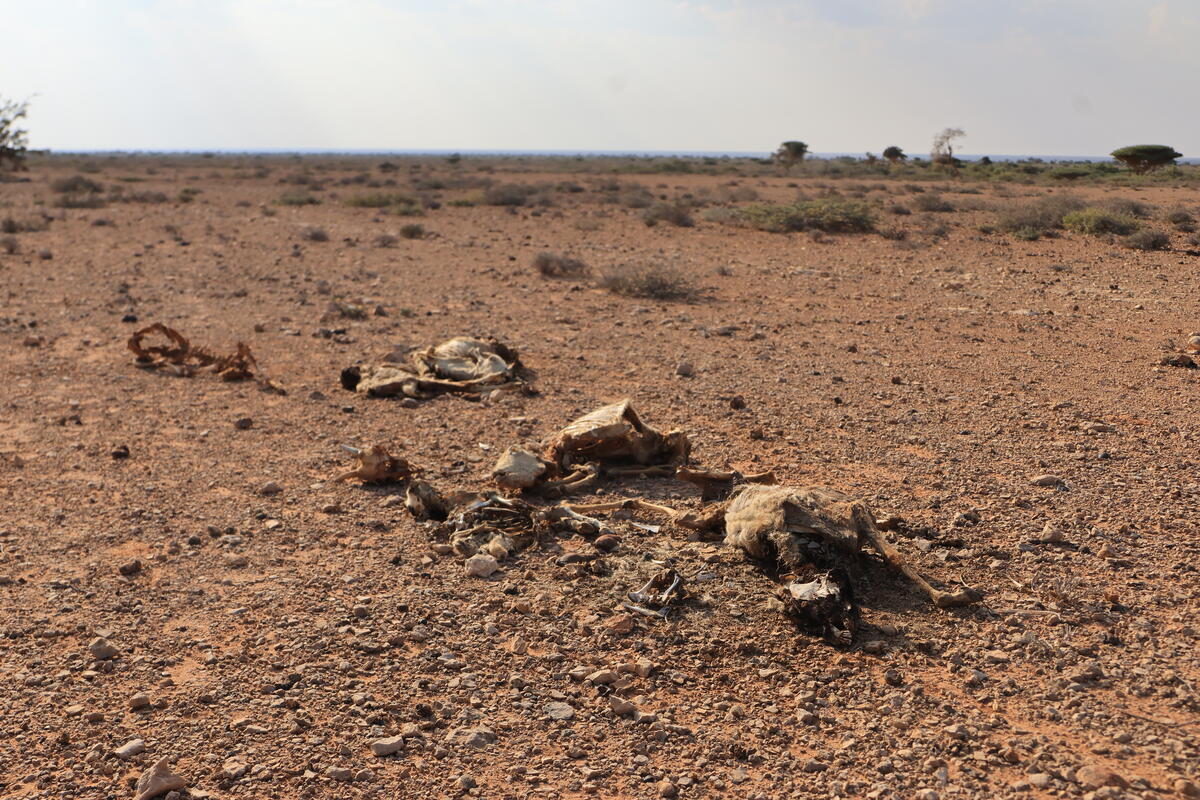
© WFP/CRC/Mohamed Ali
“El Niño is a massive threat to the food security of millions who are already vulnerable," said Carl Skau, WFP's Acting Executive Director.
"The sooner we help families to prepare for these climate shocks, the greater our ability to save lives and protect livelihoods."
Skau added that severe floods and droughts can quickly push communities from coping to crisis.
“WFP is already ramping-up early response efforts in eight countries, and we stand ready to do even more,” he said.
Experts expect El Niño to peak between September and December 2026. However, in many locations, the effects will be felt throughout 2027 due to its impact on future harvest cycles. Already, drought, flooding and extreme temperatures are putting communities at risk.
UN entities are preparing for floods, droughts and storms before they hit in order to reduce humanitarian needs. In collaboration with the Food and Agriculture Organization of the UN (FAO), the UN Office for the Coordination of Humanitarian Affairs (OCHA), and other partners, WFP has active anticipatory action plans in place in over 50 countries. These plans support governments in their preparations and help communities reduce risks.
Since May, WFP has triggered anticipatory action plans in South Sudan, Chad, Mauritania, Uganda, Guatemala and El Salvador, allocating over US$14 million to life-saving responses in support of half a million people. This has included scaling up pre-arranged financing mechanisms, such as disaster risk insurance, credit and digital payments, to make more money available at a lower cost.
According to the UN agency, these efforts help communities and governments prepare for and withstand sudden shocks, while reducing future humanitarian needs. Past El Niño events have shown that for every $1 invested in anticipatory programs, between $3 and $7 in losses and response costs can be avoided.
The global picture
The 2015–2016 El Niño phenomenon impacted the food security of approximately between 60 and 100 million people. WFP's preliminary analysis suggests that the 2026-2027 El Niño could push an additional 49 million people into acute food insecurity by the end of 2027.
The analysis concentrated on 45 countries already considered food insecure, where there is solid food security data available, and where El Niño will have a significant impact on rainfall patterns, temperatures and the occurrence of floods and droughts, rather than focusing on regions where El Niño's effects may be limited or beneficial.
In the countries likely to be most affected, the total number of people experiencing acute food insecurity — defined as being unable to meet daily food needs — would rise from approximately 225 million to 274 million: an increase of around 22 percent.
The largest impacts are expected in parts of Central America and Southern Africa, with significant effects also anticipated in eastern Africa and south and Southeast Asia.
Latin America and the Caribbean could experience one of the sharpest rises in food insecurity, affecting more than 16 million people. Central America is particularly vulnerable, with a projected increase of 83.1 percent, the largest of all analyzed areas.
East and Southern Africa face substantial risks, especially in regions where the upcoming rainy season is crucial for food production. More than 18 million people could experience deteriorating food security, which represents a 26 percent increase. Southern African countries are vulnerable because many households depend on rain-fed subsistence agriculture.
West and Central Africa are also at risk, with food insecurity projected to increase by 12 percent — affecting nearly 6 million additional people.
In Asia and the Pacific, several already vulnerable countries could see significant impacts, with an estimated 8.2 million more people facing acute food insecurity.
WFP expects countries already grappling with poverty, conflict, economic instability, and repeated weather extremes to bear the brunt of El Niño. However, its impact will not be uniform.
Some countries are already experiencing below-average rainfall, flooding, and unusually hot temperatures, while others are expected to face deteriorating conditions during the upcoming planting and harvest seasons.
While the broader regional outlook highlights widespread vulnerabilities across multiple continents, individual countries are bracing for compounding crises on the ground. A clear example of this can be seen in East Africa.
Focus on Somalia: Humanitarians prepare for El Niño ahead of rainy season
Also on Wednesday, OCHA reported that humanitarian agencies and the Somali government are ramping up their preparedness efforts in anticipation of the impacts of El Niño during the rainy season, which is expected to occur between October and December in Somalia. Forecasts indicate a high probability that El Niño will persist throughout the season, increasing the risk of widespread flooding.
Building on lessons from 2023, when floods and droughts displaced 2.3 million people and affected millions more in the East African country, OCHA said it is supporting contingency planning, risk analysis, and coordination at the national and state levels to strengthen readiness for potential flooding and displacement.
These efforts come as Somalia continues to grapple with successive droughts, floods, conflict, and shrinking humanitarian funding. The ripple effects of the wider conflict in the Middle East are also impacting the humanitarian situation, with food prices surging by up to 20 percent.
Currently, approximately 6.5 million people — nearly one-third of the population — are facing high levels of acute food insecurity (IPC Phase 3 or worse) in Somalia, with one district in the south, Buurhakaba, at risk of famine. Some 1.9 million children suffer from acute malnutrition, including nearly 500,000 who are severely malnourished.
Humanitarian assistance remains a lifeline for millions, yet funding shortfalls have forced aid agencies to reduce life-saving services despite exceptionally high needs. More than halfway through the year, only one third of the $852 million needed for this year's Humanitarian Needs and Response Plan has been funded.